
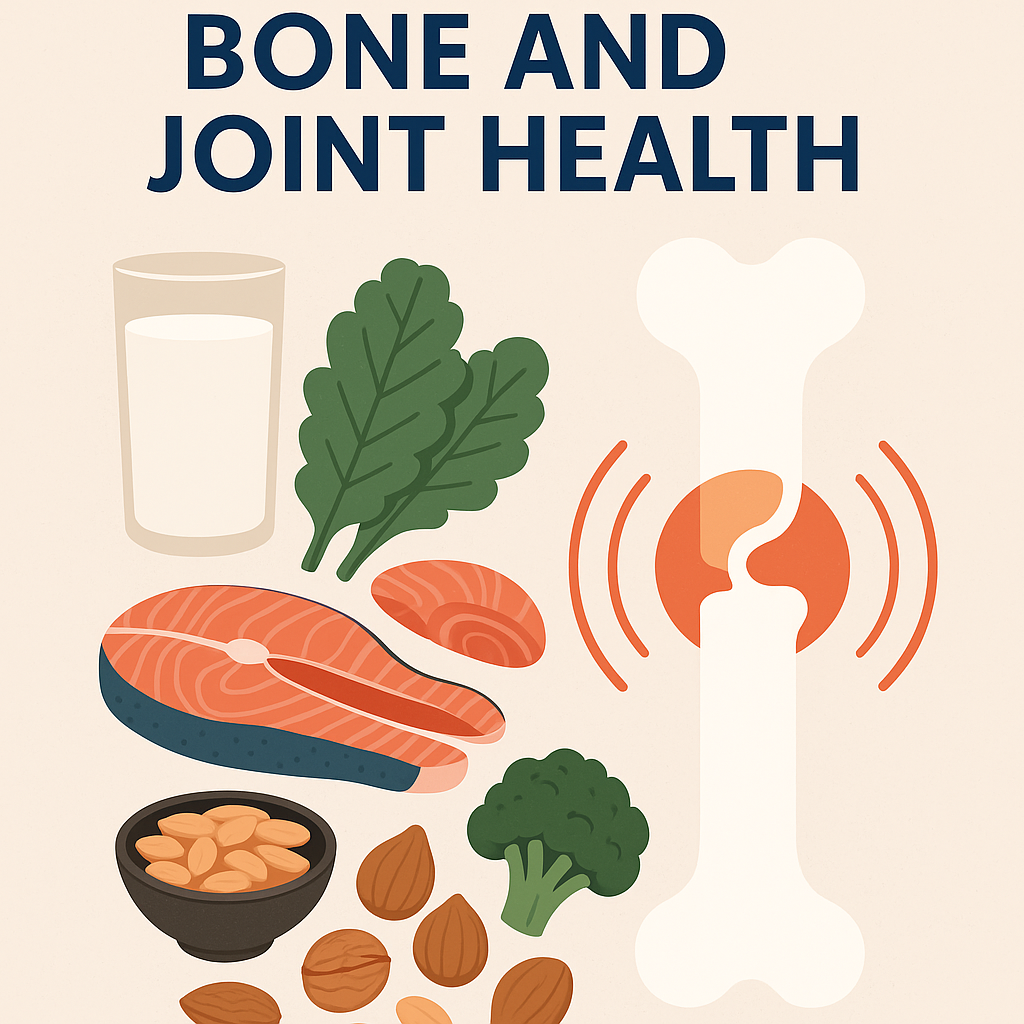
Healthy bones and joints are the foundation of an active, pain-free life. While exercise and medical care play a role, nutrition is one of the most powerful tools to support long-term bone strength and joint flexibility. What you eat today directly impacts your mobility and independence in the future.
1. Why Nutrition Matters for Bones and Joints
Bones and joints are living tissues that constantly renew themselves. Proper nutrition provides the building blocks for bone density, cartilage repair, and joint lubrication. Without the right nutrients, bones become brittle and joints stiffen, increasing the risk of osteoporosis, arthritis, and fractures.
2. Essential Nutrients for Bone Health
Calcium – The Building Block
- Found in: Milk, yogurt, cheese, almonds, tofu, green leafy vegetables.
- Role: Strengthens bones and teeth, prevents fractures.
Vitamin D – The Calcium Helper
- Found in: Sunlight exposure, fatty fish (salmon, mackerel), fortified foods, eggs.
- Role: Helps absorb calcium effectively and supports bone growth.
Magnesium & Phosphorus
- Found in: Nuts, seeds, legumes, whole grains, fish.
- Role: Work together with calcium to maintain bone density.
Vitamin K
- Found in: Kale, spinach, broccoli.
- Role: Improves bone metabolism and reduces fracture risk.
3. Nutrients for Joint Health
Omega-3 Fatty Acids
- Found in: Salmon, chia seeds, flaxseeds, walnuts.
- Role: Reduce joint inflammation and stiffness, beneficial for arthritis.
Collagen & Protein
- Found in: Bone broth, chicken, fish, beans, lentils.
- Role: Support cartilage repair and maintain joint flexibility.
Vitamin C
- Found in: Citrus fruits, strawberries, bell peppers.
- Role: Aids in collagen production for healthy cartilage.
Antioxidants
- Found in: Berries, green tea, dark chocolate.
- Role: Protect joints from damage caused by oxidative stress.
4. Foods to Limit for Better Bone and Joint Health
- Excess salt → Causes calcium loss.
- Sugary drinks & sodas → Weaken bone density.
- Excessive alcohol → Inhibits calcium absorption.
- Processed foods → Lack nutrients and increase inflammation.
5. Lifestyle Tips Along with Nutrition
- Stay physically active (weight-bearing exercises strengthen bones).
- Maintain a healthy weight (reduces pressure on joints).
- Avoid smoking—it accelerates bone loss.
- Drink enough water to keep joints lubricated.
Conclusion
Nutrition is more than just eating well—it’s about fueling your body to stay strong and mobile for years to come. A balanced diet rich in calcium, vitamin D, protein, and omega-3s can protect you from bone thinning and joint pain. Combine healthy eating with an active lifestyle, and you’ll build a strong foundation for lifelong mobility.
👉 Do you want me to also create a banner image for this blog, with visuals of healthy foods like milk, fish, nuts, and leafy greens along with a bone & joint illustration?
Leave a Reply