
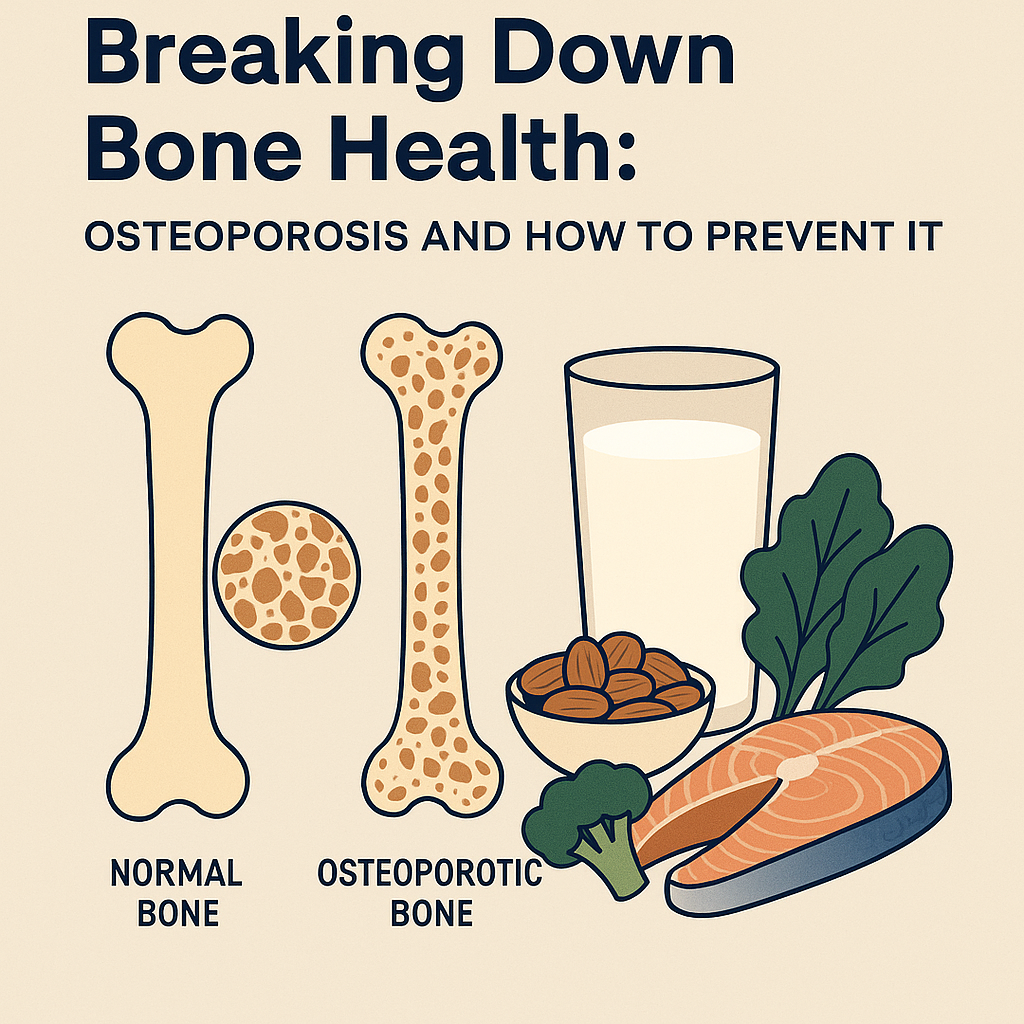
Bones may feel strong and unshakable, but they are living tissues that change throughout life. As we age, bones can lose density, becoming fragile and prone to fractures—a condition known as osteoporosis. This “silent disease” often goes unnoticed until a fracture occurs, but the good news is that prevention and management are possible with the right lifestyle choices.
1. What is Osteoporosis?
Osteoporosis is a condition where bones become weak and brittle due to a loss of bone mass and density. In severe cases, even minor falls or simple actions like bending or coughing can lead to fractures, most commonly in the hip, spine, or wrist.
Key facts:
- It affects both men and women, but women (especially post-menopausal) are at higher risk.
- Osteoporosis often develops silently, without pain, until a fracture happens.
- Bone density usually peaks around age 30, then gradually declines.
2. Risk Factors for Osteoporosis
- Age: Risk increases after 50.
- Gender: Women are more susceptible due to hormonal changes.
- Genetics: Family history of osteoporosis or fractures.
- Lifestyle factors: Smoking, excessive alcohol use, sedentary lifestyle.
- Dietary deficiencies: Lack of calcium, vitamin D, or protein.
- Medical conditions: Rheumatoid arthritis, thyroid disorders, long-term use of steroids.
3. Signs and Symptoms
Osteoporosis is often called the “silent thief” because it shows no clear signs until advanced. Watch for:
- Loss of height over time
- Stooped posture (dowager’s hump)
- Frequent bone fractures
- Back pain caused by vertebral fractures
4. How to Prevent Osteoporosis
1. Eat a Bone-Healthy Diet
- Calcium-rich foods: Dairy, tofu, almonds, broccoli, kale.
- Vitamin D: Sunlight, fatty fish, fortified foods.
- Protein: Lean meats, beans, lentils.
- Magnesium & Vitamin K: Nuts, seeds, leafy greens.
2. Exercise Regularly
- Weight-bearing exercises: Walking, jogging, dancing.
- Strength training: Builds muscle and bone strength.
- Balance and posture exercises: Yoga, tai chi, to prevent falls.
3. Lifestyle Choices
- Avoid smoking—it speeds up bone loss.
- Limit alcohol intake.
- Maintain a healthy weight (both underweight and obesity increase risk).
4. Medical Check-ups
- Bone density test (DEXA scan) after age 50 or if you’re at high risk.
- Consult your doctor about supplements or medications if needed.
5. Treatment Options (If Diagnosed)
While prevention is best, treatments can help slow bone loss and prevent fractures:
- Prescription medications (bisphosphonates, hormone therapy, etc.)
- Calcium and vitamin D supplements
- Physiotherapy for posture and strength training
- Fall-prevention strategies at home
Conclusion
Osteoporosis may be silent, but it is not unstoppable. With a balanced diet, regular exercise, and mindful lifestyle choices, you can strengthen your bones and reduce your risk. The earlier you start taking care of your bone health, the stronger your foundation will be for the future.
Leave a Reply